How to Grow Marigold
Get Your Exact Marigold Planting Dates
Enter your ZIP, city, state, or zone for a personalized planting calendar.
Your Marigold dates ·
See your dates →Ready to grow Marigold?
Order seeds or buy established plants.
* Affiliate links — we may earn a small commission at no extra cost to you.
Supplies You'll Need
* Affiliate links — we may earn a small commission at no extra cost to you.
Plant Overview
Growing Requirements
Sun
Full Sun (6-8 hours)
Water
Moderate (1 inch/week)
Spacing
12" apart
Depth
0.25" deep
Height
6-24"
Germination
5-10 days
Ready to Grow Marigold?
Find quality seeds from trusted suppliers.
* Affiliate links — we may earn a small commission at no extra cost to you.
Common Marigold Varieties
Popular cultivars to look for at your local nursery or seed supplier.
French Marigold (Dainty Marietta)
Small, prolific marigold with bicolor yellow-red blooms on compact 10-inch plants.
African Crackerjack
Tall African marigold with huge 3–4 inch pompom flowers in gold, orange, and yellow.
Signet (Gem Series)
Edible, citrus-scented single blooms on lacy foliage; excellent in salads and as a garnish.
Vanilla
Unique creamy-white African marigold; novel color that stands out in any garden bed.
Safari Mix
Compact French marigold mix with early blooms; excellent container and edging plant.
Days-to-maturity figures are approximate and vary by climate and growing conditions.
Common Marigold Problems
What to watch for — and how to fix it before it spreads.
Pests
Common in hot, dry conditions; cause bronzed, stippled leaves and fine webbing.
Increase humidity; spray with insecticidal soap or neem oil; avoid dusty conditions.
Chew ragged holes in young transplants and seedlings overnight.
Apply diatomaceous earth; use beer traps; water in the morning to keep soil dry at night.
Diseases
Gray fuzzy mold on flowers and stems in cool, wet conditions; petals turn brown and mushy.
Remove spent blooms promptly; improve airflow; avoid wetting flowers when irrigating.
White powdery coating on leaves; worse in humid weather with poor airflow.
Space plants adequately; apply potassium bicarbonate; choose resistant varieties.
Phytoplasma spread by leafhoppers causes distorted, yellowed growth and malformed flowers.
Remove and destroy infected plants; control leafhopper populations with row covers.
Common Mistakes
Spent blooms left on the plant signal it to stop flowering and focus on seed production.
Remove dead flowers weekly to extend the blooming season into fall frost.
Marigolds transplant poorly if root-bound; young transplants actually do better.
Start 4–6 weeks before last frost (not earlier); or direct-sow after frost — they grow fast.
Seed Saving Guide
EasyWhen to Harvest Seed
Allow flower heads to dry completely on the plant until the petals are papery and brown.
Processing
Pull seeds (needle-like slivers at base of petals) from dried heads, dry 1 week before storing.
Seed Viability
Up to 2 years when stored cool, dark, and dry.
Pro Tip
French marigolds (T. patula) are often OP. African marigolds (T. erecta) can be hybrid — check variety before saving.
Seed Storage Supplies
* Affiliate links — we may earn a small commission at no extra cost to you.
Raised Bed Planting Guides
A 4×8 bed fits 32 plants of Marigold. See plant counts, spacing grids, and companion pairings for every bed size →
Marigold Planting Calendar by Zone
Marigold Planting Calendar by State
Other Plants
Frequently Asked Questions
When should I plant Marigold? +
Start Marigold seeds indoors 6 weeks before your last frost date, then transplant outdoors 2 weeks after the last frost. Use the search on this page to find exact dates for your ZIP code or city.
How long does Marigold take to grow? +
Marigold typically blooms in about 50 days from planting. Exact timing varies by variety, soil conditions, and local climate.
Should I start Marigold indoors or direct sow? +
Marigold should be started indoors 6 weeks before the last frost date. This gives seedlings time to establish before being transplanted outside after frost danger has passed.
How much sun does Marigold need? +
Marigold requires full sun (6-8 hours) to thrive.
How far apart should I plant Marigold? +
Space Marigold plants 12 inches apart to allow adequate airflow and root development.
How much water does Marigold need? +
Marigold has moderate (1 inch/week) water needs. Consistent moisture is important especially during germination and early growth.
Can you save seeds from Marigold? +
Yes — seed saving difficulty for Marigold is rated easy. Allow flower heads to dry completely on the plant until the petals are papery and brown. Pull seeds (needle-like slivers at base of petals) from dried heads, dry 1 week before storing.
How long do Marigold seeds last in storage? +
Properly dried and stored Marigold seeds remain viable for up to 2 years. Store in a cool, dark, dry location in an airtight container with a silica gel packet for best results.
Are Marigold seeds open-pollinated? +
Yes — Marigold is open-pollinated, meaning seeds saved from your harvest will grow plants true to the parent variety. This makes it an excellent candidate for building a self-sustaining garden.
About Marigold
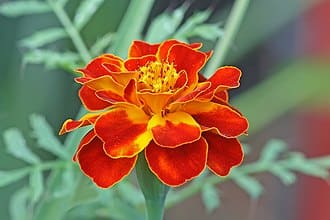
Classic garden flower with orange, yellow, and red blooms. A powerful companion plant that repels aphids, nematodes, and deer. Great border plant for vegetable gardens.
Expect your Marigold to be ready for harvest in approximately 50 days from planting.
Use the search above or browse by zone or state to find the perfect planting dates for your location.