How to Grow Spinach
Get Your Exact Spinach Planting Dates
Enter your ZIP, city, state, or zone for a personalized planting calendar.
Your Spinach dates ·
See your dates →* Affiliate links — we may earn a small commission at no extra cost to you.
Supplies You'll Need
* Affiliate links — we may earn a small commission at no extra cost to you.
Plant Overview
Growing Requirements
Sun
Partial Shade to Full Sun
Water
Regular (keep moist)
Spacing
6" apart
Depth
0.5" deep
Height
6-12"
Germination
7-14 days
Ready to Grow Spinach?
Find quality seeds from trusted suppliers.
* Affiliate links — we may earn a small commission at no extra cost to you.
Good Companions
Full Companion Planting Guide for Spinach
See which plants help Spinach thrive, which to keep away, and raised bed layout tips →
Common Spinach Varieties
Popular cultivars to look for at your local nursery or seed supplier.
Bloomsdale Long Standing
Savoy (crinkled) heirloom spinach with thick, crumpled leaves; bolt-resistant and reliable.
Space
Smooth-leaved hybrid that resists bolting better than most; popular for spring and fall growing.
Malabar Spinach
Heat-tolerant tropical vine that thrives in summer when true spinach bolts; glossy, mild leaves.
New Zealand Spinach
Not a true spinach but produces similarly; very heat- and drought-tolerant groundcover.
Days-to-maturity figures are approximate and vary by climate and growing conditions.
Common Spinach Problems
What to watch for — and how to fix it before it spreads.
Pests
Larvae tunnel between leaf surfaces leaving white, serpentine trails; mines make leaves inedible.
Remove and destroy mined leaves immediately; use row covers; practice crop rotation.
Green colonies on undersides of leaves; transmit cucumber mosaic virus.
Spray with insecticidal soap; use row covers in spring; plant away from infected cucurbits.
Diseases
Yellow patches on upper leaf with purple-gray spores on undersides; spreads rapidly in cool, wet weather.
Plant resistant varieties; avoid overhead irrigation; ensure good airflow; apply copper fungicide.
Seedlings collapse at the soil line; caused by Pythium or Fusarium in wet, cool soils.
Improve drainage; use sterile potting mix for starting seeds; avoid overwatering.
Common Mistakes
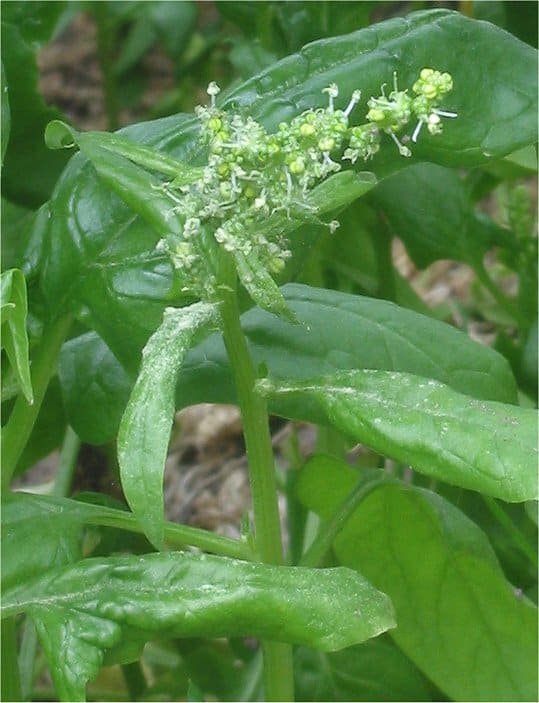
Spinach bolts (flowers) almost immediately when days exceed 13–14 hours or temps go above 75°F.
Grow as a cool-season crop in spring (early) and fall; try heat-tolerant Malabar spinach in summer.
Spinach seeds need good soil contact; too-shallow seeding leads to poor, patchy germination.
Sow 1/2 inch deep; press soil firmly over seeds; keep moist until germination.
Seed Saving Guide
ModerateWhen to Harvest Seed
Let plants bolt in heat and allow seed stalks to dry fully before harvesting.
Processing
Strip dried seed stalks, thresh to release seeds, winnow to remove chaff.
Seed Viability
Up to 3 years when stored cool, dark, and dry.
Pro Tip
Spinach is wind-pollinated and dioecious — you need both male and female plants. Isolate by 1000 feet for pure seed.
Seed Storage Supplies
* Affiliate links — we may earn a small commission at no extra cost to you.
Raised Bed Planting Guides
A 4×8 bed fits 4 per sq ft of Spinach. See plant counts, spacing grids, and companion pairings for every bed size →
Spinach Planting Calendar by Zone
Spinach Planting Calendar by State
Other Plants
Frequently Asked Questions
When should I plant Spinach? +
Sow Spinach seeds directly in the garden 6 weeks before your last frost date. Use the search on this page to find exact dates for your location.
How long does Spinach take to grow? +
Spinach typically matures in about 40 days from planting. Exact timing varies by variety, soil conditions, and local climate.
Should I start Spinach indoors or direct sow? +
Spinach does best when direct sown outdoors. Plant seeds directly in the garden at the appropriate time based on your local frost dates.
How much sun does Spinach need? +
Spinach requires partial shade to full sun to thrive.
How far apart should I plant Spinach? +
Space Spinach plants 6 inches apart to allow adequate airflow and root development.
How much water does Spinach need? +
Spinach has regular (keep moist) water needs. Consistent moisture is important especially during germination and early growth.
Can you save seeds from Spinach? +
Yes — seed saving difficulty for Spinach is rated moderate. Let plants bolt in heat and allow seed stalks to dry fully before harvesting. Strip dried seed stalks, thresh to release seeds, winnow to remove chaff.
How long do Spinach seeds last in storage? +
Properly dried and stored Spinach seeds remain viable for up to 3 years. Store in a cool, dark, dry location in an airtight container with a silica gel packet for best results.
Are Spinach seeds open-pollinated? +
Yes — Spinach is open-pollinated, meaning seeds saved from your harvest will grow plants true to the parent variety. This makes it an excellent candidate for building a self-sustaining garden.
About Spinach
Nutrient-dense leafy green for cool seasons. Bolts quickly in heat; plant in spring and fall.
Expect your Spinach to be ready for harvest in approximately 40 days from planting.
Use the search above or browse by zone or state to find the perfect planting dates for your location.